
ADUs and real estate agents
How a real estate agent can help with your ADU
Whether you're shopping for a home with room for a backyard cottage or wondering what your ADU adds to your property's value, a good local agent can be a great teammate. Here's what they're well placed to help with, where their role ends, and what to ask before you hire one.
Last reviewed October 18, 2026
1 · Shopping for a home
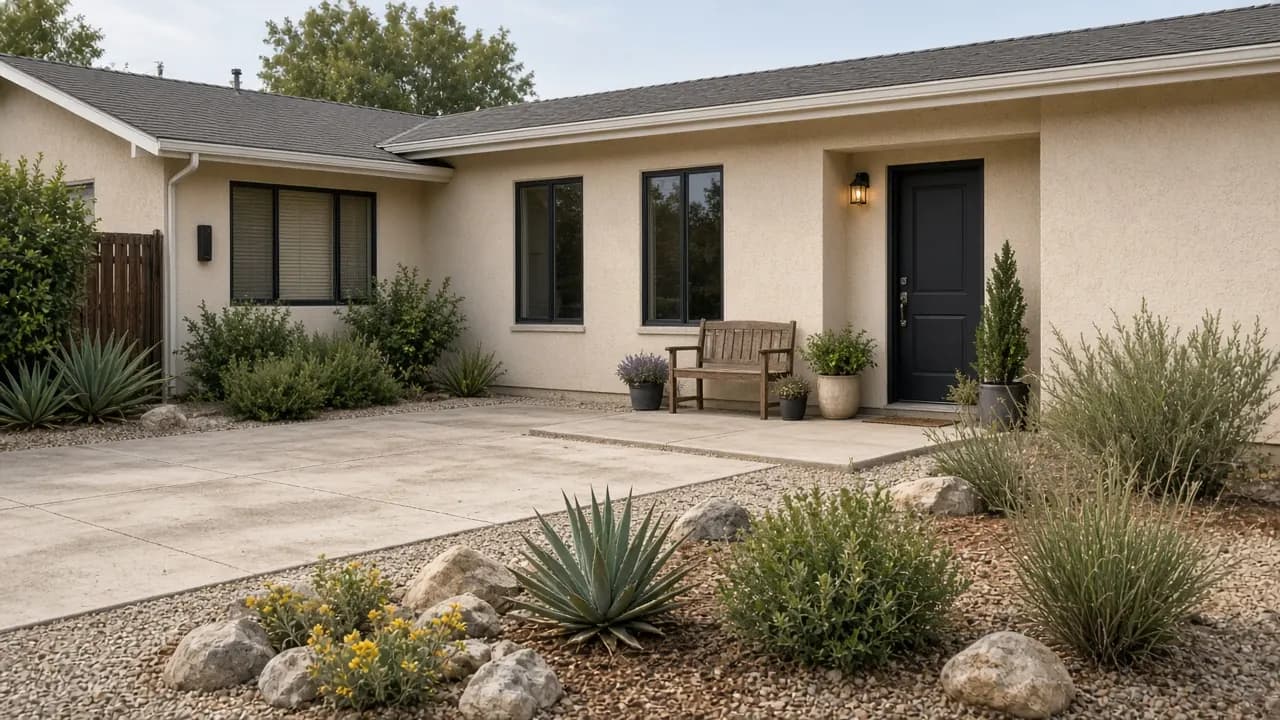
Buying a home with ADU potential
If you want to add an ADU later, an agent who knows the area can help you shortlist homes with useful features: lot size and shape, rear or alley access, a detached garage that might be converted, and where utility lines run. California state law makes ADUs possible on most residential lots, but local details like easements, fire zones, coastal rules, and HOA rules still matter.
A smart move is to write in time for your own due diligence: a contingency period to call the planning department, review the title report for easements and restrictions, and get a contractor or designer to take a quick look. Your agent can help you structure that, but the city or county gives the real answer on what you can build.
Sources: HCD: Accessory dwelling units (incl. ADU Handbook) · Cal. Gov. Code §66314 (ADU standards)
2 · Lot, zoning, permits and title
Early feasibility and paperwork checks
Agents can pull together useful starting information: zoning labels, assessor records, past permits on file, and the preliminary title report. That's a helpful first pass, not a zoning determination or legal opinion. Planning staff decide what's allowed, and a title officer or real estate attorney should explain anything unusual in the title.
For a home that already has an ADU, an agent can help you ask whether it was permitted, and request permit records and the seller's disclosures. Unpermitted units can affect value, financing, insurance, and rentability. Our free address checker can also give you a sourced summary of the state and local ADU rules for a specific address.
- Zoning, overlays, and the local ADU ordinance: confirm with the planning department
- Building permits and final inspection for any existing ADU: request records from the building department
- Easements, CC&Rs, and HOA rules in the preliminary title report
- Seller disclosures about additions, conversions, or unpermitted work
Sources: HCD: Accessory dwelling units (incl. ADU Handbook) · CA Department of Real Estate: Consumers
3 · Value and rent
ROI, rent estimates, and why a CMA isn't an appraisal
Agents often prepare a comparative market analysis (CMA): a look at recent nearby sales and rents to estimate a likely price or rent range. CMAs are useful for planning, but they aren't appraisals. Lenders rely on appraisals by licensed or certified appraisers, which follow professional standards.
ADUs can be tricky to value. Appraisers need comparable sales that also have ADUs, which can be scarce in some neighborhoods, so an ADU may not add as much to the appraised value as it cost to build. Rental projections are estimates, not guarantees; check local rent rules, vacancy, taxes, insurance, and maintenance too.
Sources: Fannie Mae Selling Guide: Special property eligibility (ADUs) · Freddie Mac: Accessory dwelling units · CA Bureau of Real Estate Appraisers
4 · Paying for it
Financing options to discuss (with a lender)
Agents can explain the general landscape and introduce you to lenders, but loan terms, qualification, and tax effects are questions for a licensed lender and a tax professional. Common paths include cash-out refinancing, home equity loans or lines of credit (HELOCs), renovation or construction loans, and, when buying, loan programs that may count some expected ADU rental income under Fannie Mae and Freddie Mac rules.
About grants: the CalHFA ADU Grant Program's funding has been fully allocated, and CalHFA warns that anyone offering to get you an ADU grant is likely running a scam. Some cities and counties run their own ADU incentives or fee waivers, so ask your local planning department what's currently available.
On referrals: federal RESPA rules generally prohibit kickbacks or referral fees between settlement service providers, like an agent and a lender or title company, for referring you. If an agent recommends a lender, it's fair to ask whether they have any business relationship, and you're always free to shop around.
Sources: CalHFA: ADU Grant · CFPB: RESPA Section 8 (Reg. X §1024.14) · Freddie Mac: Accessory dwelling units
5 · Building your team
Referrals to designers, engineers and contractors
Local agents often know designers, architects, engineers, surveyors, and contractors who've done ADUs nearby. A referral is a starting point. Check each one yourself: contractors with the Contractors State License Board, architects with the California Architects Board, and engineers and land surveyors with the Board for Professional Engineers, Land Surveyors, and Geologists.
A referral is not a background check. How to get ADU contractor bids walks through checking the license on CSLB's website, comparing written bids, and reading the contract.
Sources: Contractors State License Board · Board for Professional Engineers, Land Surveyors, and Geologists
6 · Selling separately or splitting the lot
Separate sale of an ADU and SB 9 lot splits
In general, a California ADU can't be sold separately from the main house. There are two exceptions in state law. First, under AB 1033 (now Gov. Code §66342), a city or county may choose to adopt an ordinance allowing an ADU and the main home to be sold separately as condominiums, with requirements such as following the Subdivision Map Act and Davis-Stirling Act, a safety inspection, and written consent from lienholders. It only applies where the local agency has opted in. Second, a narrower rule (originally AB 587, now §66341) allows separate sale to income-qualified buyers when a qualified nonprofit built the home or ADU, under a recorded tenancy-in-common agreement with long-term affordability restrictions.
SB 9 is a different tool: it can allow an urban lot split of an eligible single-family lot into two lots (Gov. Code §66411.7), with conditions like an owner-occupancy affidavit and limits in certain areas. Agents can help you think through market value, but condo conversions and lot splits need the planning department, a surveyor, and usually a real estate attorney.
Sources: Cal. Gov. Code §66342 (AB 1033 condo option) · Cal. Gov. Code §66341 (nonprofit separate sale) · Cal. Gov. Code §66411.7 (SB 9 urban lot split)
Questions to ask an agent
Use these when you interview agents. The answers will tell you a lot about their ADU experience.
- What's your California DRE license number? (Then look it up on the DRE site.)
- How many homes with ADUs, or with ADU potential, have you helped buy or sell in this area?
- How do you check whether an existing ADU was permitted?
- Can you show recent comparable sales of homes with ADUs, and explain how appraisers have valued them here?
- How would you write the offer so I have time to check feasibility with the planning department?
- Which local ADU rules, fees, or incentives should I ask the city about?
- If you refer me to a lender, contractor, or other provider, do you have any business relationship or receive anything from them?
- Does this city allow ADUs to be sold separately as condos under AB 1033?
- When should I bring in an attorney, appraiser, engineer, or tax professional?
Quick answers
Can a real estate agent tell me if I can build an ADU?
An agent can gather helpful starting info, but the city or county planning department decides what's allowed. Agents can't give legal advice.
Is a CMA the same as an appraisal?
No. A CMA is an agent's market estimate. Lenders use appraisals by licensed or certified appraisers.
Can I sell my ADU separately in California?
Usually not. Exceptions: where the city or county has adopted an AB 1033 ordinance allowing condo sales (Gov. Code §66342), or certain nonprofit, income-restricted arrangements (§66341).
Is the CalHFA ADU grant still available?
CalHFA says its ADU grant funding has been fully allocated and warns of scams. Ask your city or county about local programs.
How do I check a real estate agent's license?
Use the California Department of Real Estate public license lookup at dre.ca.gov.